
How long does it normally take?
Longer than most owners expect, and longer than it used to be:
| Measure | Days on market |
|---|---|
| North America, used boats, 2025 average | 139 |
| USA, used boats, average | 165 |
| Q3 2026, median across segments | 159 |
| Q3 2026, average across segments | 196 |
| Priced right and listed on several platforms | 30 – 90 |
So the honest baseline is three to six months. The gap between that and the 30 to 90 days a well-prepared boat achieves is almost entirely under your control.
Why do boats sit?
Four reasons, in rough order of how often they are the real one:
- The price is wrong. Not high, wrong: set against what the owner paid or hopes for, rather than against what comparable boats are actually listed at today.
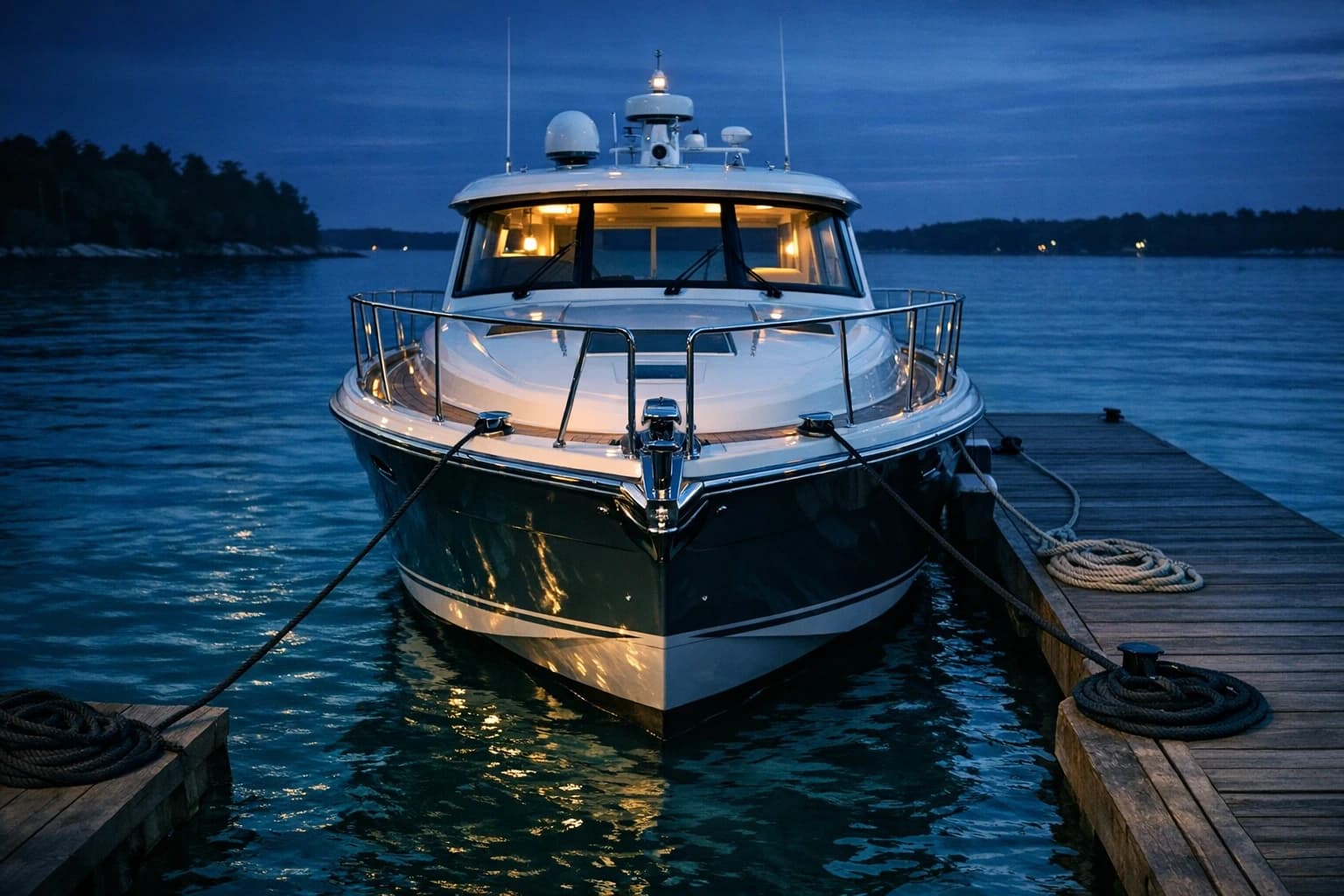
- The listing looks lazy. Eight dark photos taken on a phone, half of them of the same cockpit.
- Nobody answers. An enquiry on Saturday that gets a reply on Tuesday is usually a buyer who has moved on.
- The boat is not ready. Personal clutter aboard, no service records, an engine fault everyone can hear.
A boat that has been listed for 60 days or more develops a reputation of its own. Buyers see the date, assume there is a problem the photos are not showing, and skip it. That is why the first month matters more than the next three.
What price actually sells?
Price against live comparable listings, not against what you paid and not against a valuation tool in isolation. Same make, same model, similar year, similar hours, and crucially in your region, because an identical boat in another state is not a comparable if a buyer has to arrange transport.
If you need it gone quickly, go in slightly under the cluster of comparables rather than slightly over with room to negotiate. The listings that sell fast are usually the ones that look obviously fair in the first ten seconds of a search results page.
What to do before a single photo
- Deep clean inside and out, including the bilge and the heads
- Remove every personal item, so a buyer can picture it as theirs
- Fix anything that makes a noise, a smell or a visible stain
- Gather maintenance logs, the title and receipts for upgrades into one folder
- Put fresh fenders and tidy dock lines on it, because scruffy lines read as neglect
None of this is expensive. All of it changes what the photographs look like, which is the only thing most buyers will ever see.
How much do photos and video matter?
More than anything else you control, because the images decide whether a buyer makes contact at all. Boat Trader's own selling guide puts it plainly: most buyers decide whether to enquire from the images alone.
An honest caveat on the numbers. You will find articles claiming a listing with video gets some specific multiple of the views. Neither Boat Trader nor YachtWorld publishes a video-versus-no-video conversion figure, and we are not going to invent one. What is documented is that Boat Trader built a dedicated video programme in 2022, and that the large brokerages film their flagship listings and not their cheap ones.
What a video does reliably is answer the questions a gallery leaves open: how the spaces connect, how big the saloon really is, what the headroom is like. Those are the questions that otherwise become a viewing, and a viewing that could have been avoided is a week lost.
Getting one is no longer the hard part. This is where most owners stop, because they are picturing the old version of it: book a videographer, find a captain, wait for a weather window, wait again for an edit. Two to four weeks, four figures, and a day of your own time standing on a dock.
That is not what it takes any more. If your boat is already listed with a decent photo gallery, the film can be built from those photographs. You send the link and nothing else happens to you. No shoot to arrange, nobody coming to the boat, and it does not matter whether it is in the water, hauled out, or shrink-wrapped for the winter.
Usually inside 12 hours the film comes back, as a standard MP4 file. Not a player you have to embed, not a login. It goes straight onto the listing, onto Facebook Marketplace, into an Instagram post, or into a reply to the buyer who emailed you this morning. One boat is $149.
Which is the point, for a page about selling quickly. A buyer who asks “can I see more of it?” gets an answer the same day, while they are still interested, instead of a viewing pencilled in for next weekend that half of them never turn up to.
- No shoot, no scheduling. The input is a listing URL.
- Nothing has to be done to the boat. It can be anywhere, in any state.
- Usually 12 hours, against two to four weeks for a shoot.
- $149 for one boat, against $1,000 at the very bottom of a half-day shoot.
- We say no when the gallery is too thin, before you pay, rather than hand you something you would not publish.
Where should you list it?
More than one place, always. The specialist marketplaces reach people actively shopping for a boat: Boat Trader alone reports more than 10 million visitors a month, and YachtWorld carries over 66,000 brokerage listings.
For smaller trailerable boats, Facebook Marketplace and local classifieds genuinely outperform the specialists, because the buyer pool is local and the fees are nothing. For anything that needs a survey, an escrow and documentation, the specialists are where the serious buyers are.
Broker or private sale?
A private sale keeps the commission, which across the US industry conventionally runs at 10% of the sale price. The trade is that you handle photography, listing, enquiries, viewings, sea trials and paperwork yourself.
A broker earns that 10% on bigger or more complicated boats: documented vessels, boats with liens, out-of-state or international buyers, and anything involving a survey and an escrow process. The rough line most owners draw is the point where a mistake would cost more than the commission.
If you go the broker route, the directories on this site list every brokerage in several cities with their ratings and contact details, and nobody paid to be on them.